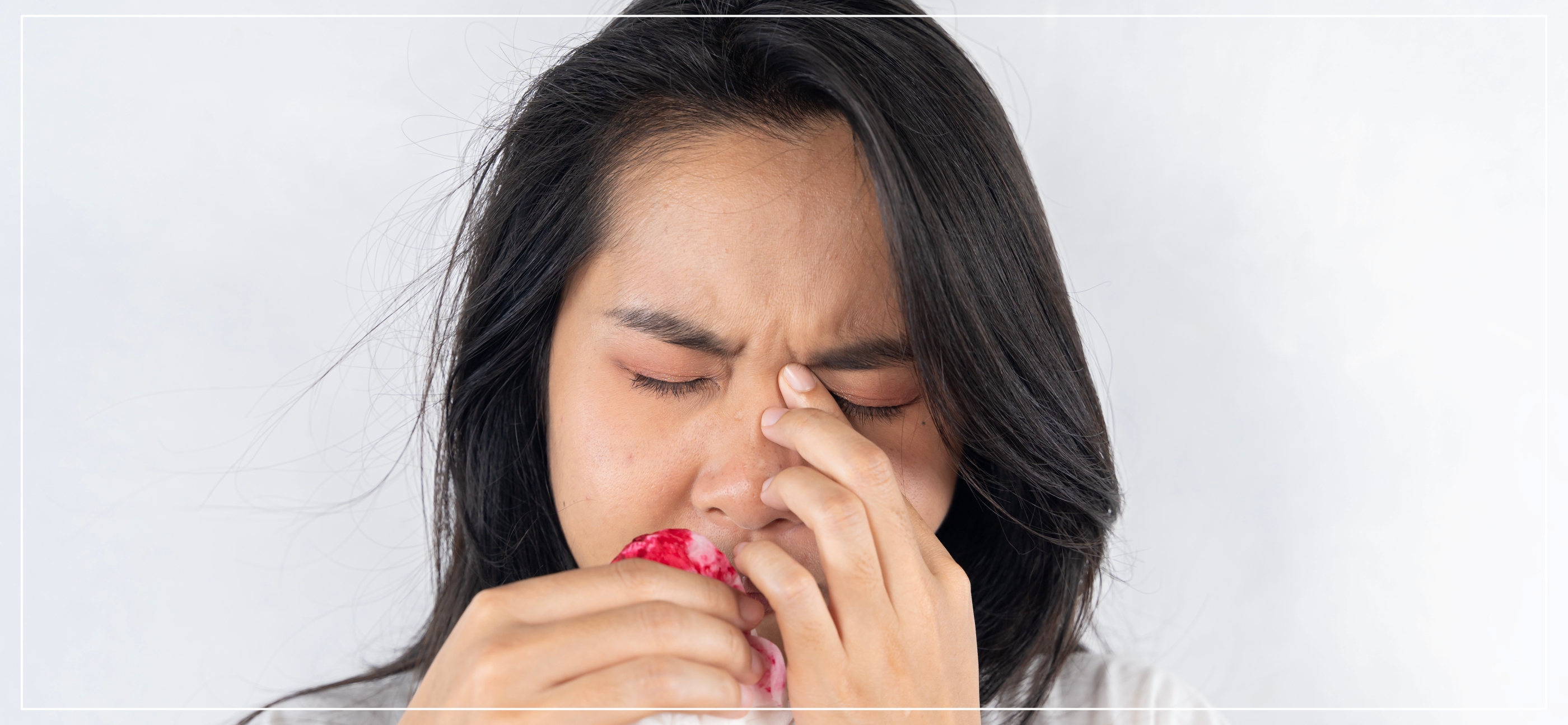
A nosebleed, also called as epistaxis, is bleeding from the nose, often caused by dryness, injury, or irritation to the blood vessels in the nasal lining. It is common condition
and usually not dangerous. Many people experience them at least once in their life, particularly during winter, dry weather, allergies, or after picking the nose. But sometimes, a nosebleed can be a sign that something more serious is going on.
Knowing when to worry can help you stay safe and get the right treatment on time. In this blog, we have tried to explain the signs that indicate the need to seek medical attention.
- If the Nosebleed Lasts More Than 20 Minutes: Most nosebleeds stop within a few minutes when you sit upright and pinch the soft part of your nose. But if the bleeding continues for more than 20 minutes, even after applying pressure, it is important to seek medical help. This could mean the bleeding is coming from a deeper blood vessel.
- If the Bleeding Is Very Heavy: If blood is pouring out quickly or you are swallowing a lot of blood, it may be a serious bleed. Heavy bleeding can lead to dizziness or weakness. In such cases, don’t wait, get medical care immediately.
- If Nosebleeds Happen Frequently: Having nosebleeds once in a while is normal. But if you get them often, for example, several times a week or month, you should get checked. Frequent nosebleeds may be caused by high blood pressure, allergies, nasal infections, blood-thinning medicines, a deviated septum, vitamin deficiencies and bleeding disorders.
- If the Nosebleed Happened After an Injury: If you hit your nose or head and then experience bleeding, you must be careful. A nosebleed after a fall, accident, or sports injury may indicate a fracture or internal damage. Seek medical attention, especially if there is swelling, severe pain, or difficulty breathing through the nose.
- If You Have Other Symptoms Along With the Bleed: A nosebleed can be serious if it comes along with:
- Chest pain
- Trouble breathing
- Severe headache
- Blurry vision
- Weakness or fainting
- Bleeding from gums or skin
- Easy bruising
These symptoms may point to a medical condition affecting blood pressure, platelets, or blood vessels.
- If You Are Taking Blood Thinners: People who take medicines like aspirin, warfarin, or other blood thinners bleed more easily. So, even a small nosebleed can become difficult to stop. If you get frequent or heavy nosebleeds while on such medicines, inform your doctor.
- If a Child Under 2 has a Nosebleed: Nosebleeds are unusual in very young children. If a child under 2 years has a nosebleed, it’s a good idea to get them checked to ensure everything is normal.
How to Control a Simple Nosebleed
Sit upright, don’t lie down.
Lean forward slightly so you don’t swallow blood.
Pinch the soft part of your nose for 10 to 15 minutes.
Apply a cold pack on the nose or cheeks.
Conclusion
Most nosebleeds are harmless and stop on their own. But long-lasting, frequent, or heavy nosebleeds or those that happen after an injury need medical attention. Paying attention to the warning signs helps you stay safe, particularly if you have high blood pressure or take blood-thinning medicines. When in doubt, it is always best to consult a doctor.


 Call Us:
011 4338 8888
Call Us:
011 4338 8888

 Book an Appointment
 Locate us on Google Map
 011 4338 8888


Leave a Reply
Your email address will not be published. Required fields are marked *