

 Call Us:
011 4338 8888
Call Us:
011 4338 8888

 Book an Appointment
 Locate us on Google Map
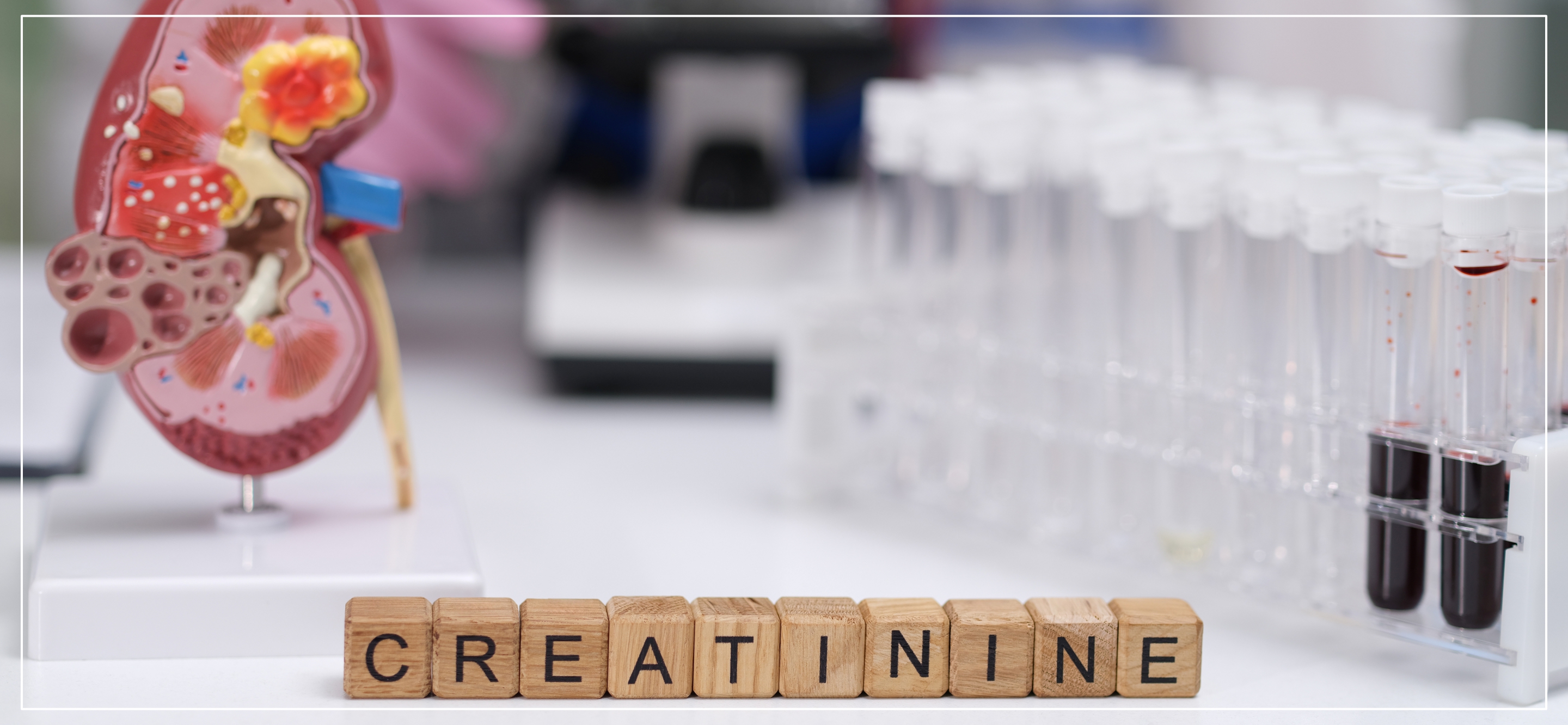
Well, many people only hear about creatinine when they receive a blood test report. When they see the value marked as “high”, they get confused and become anxious. Creatinine is a waste product produced by your muscles and removed from the body by the kidneys. When the kidneys are functioning well, the creatinine levels stay within a normal range. But when the levels increase, it may signal that the kidneys are not functioning properly.
Creatinine is a natural waste product formed when muscles break down a compound called creatine, which helps provide energy to muscles. The kidneys filter creatinine from the blood and remove it through urine.
Creatinine is a natural waste product formed when muscles break down a compound called creatine, which helps provide energy to muscles. The kidneys filter creatinine from the blood and remove it through the kidneys in urine.
Normal creatinine levels can vary slightly depending on age, gender, muscle mass, and overall health. The normal ranges include:
Doctors usually interpret creatinine levels along with other tests, such as urine evaluation and ultrasonography, before confirming any kidney problem.
High creatinine levels usually indicate that the kidneys are not filtering waste properly. Some common causes include:
Creatinine itself is non-toxic; it is a marker for reduced kidney function and helps us to estimate kidney function. High creatinine suggests kidney disease and reduced kidney function or failure. As kidney function goes down, it leads to various disturbances in the body affecting other systems and organs, causing a severe risk to life.
In severe cases, kidney function may decline to the point where medical treatment becomes necessary.
In many cases, high creatinine levels do not cause noticeable symptoms in the early stages. This is why routine health checkups are important. But when the kidney function worsens, some people may experience fatigue and weakness, swelling in the feet or ankles, reduced urine output, shortness of breath, and nausea or loss of appetite.
If these symptoms appear along with high creatinine levels, people should seek medical help without delay.
Once one is diagnosed with Chronic Kidney Disease and has high creatinine levels, one can keep himself healthy and still retard the progression of kidney disease by adopting few lifestyle changes and medications. Our strategies should include:
Medical treatment may also be required depending on the severity of kidney dysfunction.
How to Control High Creatinine Levels
We can control creatinine levels by long-term lifestyle and medical management. Our strategies should include:
In advanced kidney disease, when the kidneys lose their ability to filter waste effectively, treatments such as Dialysis may be required.
Dialysis is a medical procedure that removes waste products, excess fluids, and toxins from the blood when the kidneys can no longer perform this function. Very high creatinine levels often indicate severe kidney dysfunction, and dialysis may be recommended in such situations to support the body’s normal balance.
A slightly elevated creatinine level does not always mean there is a serious problem. Sometimes it may occur due to dehydration, heavy exercise, or temporary illness.
However, we should be moe concerned if:
In such cases, doctors may recommend additional tests such as urine analysis, imaging studies, or specialized kidney function tests.
Proper evaluation and timely treatment are essential for managing kidney problems. At Aakash Healthcare Super Speciality Hospital, Dwarka, we have a team of experienced specialists who provide comprehensive diagnosis, advanced kidney care, and personalized treatment plans for patients with kidney-related conditions.
Regular health screenings and early medical consultation can help prevent complications and ensure better kidney health.
High creatinine levels should never be ignored, as they can be an early warning sign of kidney dysfunction. However, timely diagnosis, healthy lifestyle choices, and proper medical care can help control creatinine levels and protect kidney health.
 011 4338 8888



Leave a Reply
Your email address will not be published. Required fields are marked *