

 Call Us:
011 4338 8888
Call Us:
011 4338 8888

 Book an Appointment
 Locate us on Google Map
Have you ever felt a gritty, burning sensation in your eyes, especially after a long day staring at a computer screen? Or perhaps your eyes unexpectedly start watering profusely while you are out in the wind?
If this sounds familiar, you are not alone. Dry Eye Disease (DED)—frequently called dry eye syndrome—is one of the most common reasons people visit an eye doctor today. Far more than just a minor annoyance, dry eyes can significantly impact your daily comfort, visual clarity, and overall quality of life.
Let’s break down what dry eyes are, why they happen, and how you can find lasting relief.
To understand dry eyes, it helps to look at how your eyes stay protected. Every time you blink, your eyelids spread a delicate fluid called the "tear film" across the surface of your eye. This film is meticulously engineered and consists of three essential layers:
Dry eye occurs when there is an imbalance in this system. Either your eyes do not produce enough water (aqueous-deficient), or the oil layer is poor, causing your tears to evaporate way too fast (evaporative dry eye).
If you feel like dry eyes are everywhere these days, you are right. Global studies show that dry eye disease affects anywhere from 5% to over 50% of the population, depending on the region and the age group studied.
Its prevalence has skyrocketed in recent decades due to shifting modern lifestyles. While it historically affected older adults predominantly—particularly women over the age of 50 due to hormonal shifts—it is now striking younger demographics at alarming rates. The culprit? Our hyper-digital, indoor-centric lifestyles.
Dry eye has many facets to it, meaning it is usually triggered by a combination of environmental, lifestyle, and biological factors. The primary root causes include:
Meibomian Gland Dysfunction (MGD): The most frequent cause of dry eye. The tiny oil glands in your eyelids become blocked or sluggish, resulting in tears that evaporate instantly.
Prolonged Screen Time: When staring at smartphones, tablets, or laptops, our blink rate drops by half or more. Less blinking means less tear distribution and faster evaporation.
Environmental Triggers: Dry indoor heating, air conditioning, ceiling fans, high altitudes, smoke, and windy outdoor environments rapidly dry out the tear film.
Aging and Hormones: Natural tear production slows down as we age. Additionally, hormonal fluctuations—such as those during pregnancy, menopause, or from birth control pills—frequently trigger dry eyes in women.
Medications: Common drugs like antihistamines, decongestants, certain blood pressure medications, and antidepressants can reduce your body's ability to produce moisture.
Underlying Health Conditions: Autoimmune disorders like Sjogren's syndrome, rheumatoid arthritis, lupus, and thyroid conditions are closely linked to severe dry eye.
While chronic dry eye is often a long-term condition, it can be managed effectively. Depending on how severe your symptoms are, a combination of lifestyle changes and medical treatments can restore comfort:
1. Simple Lifestyle and Home Adjustments
2. Medical Solutions
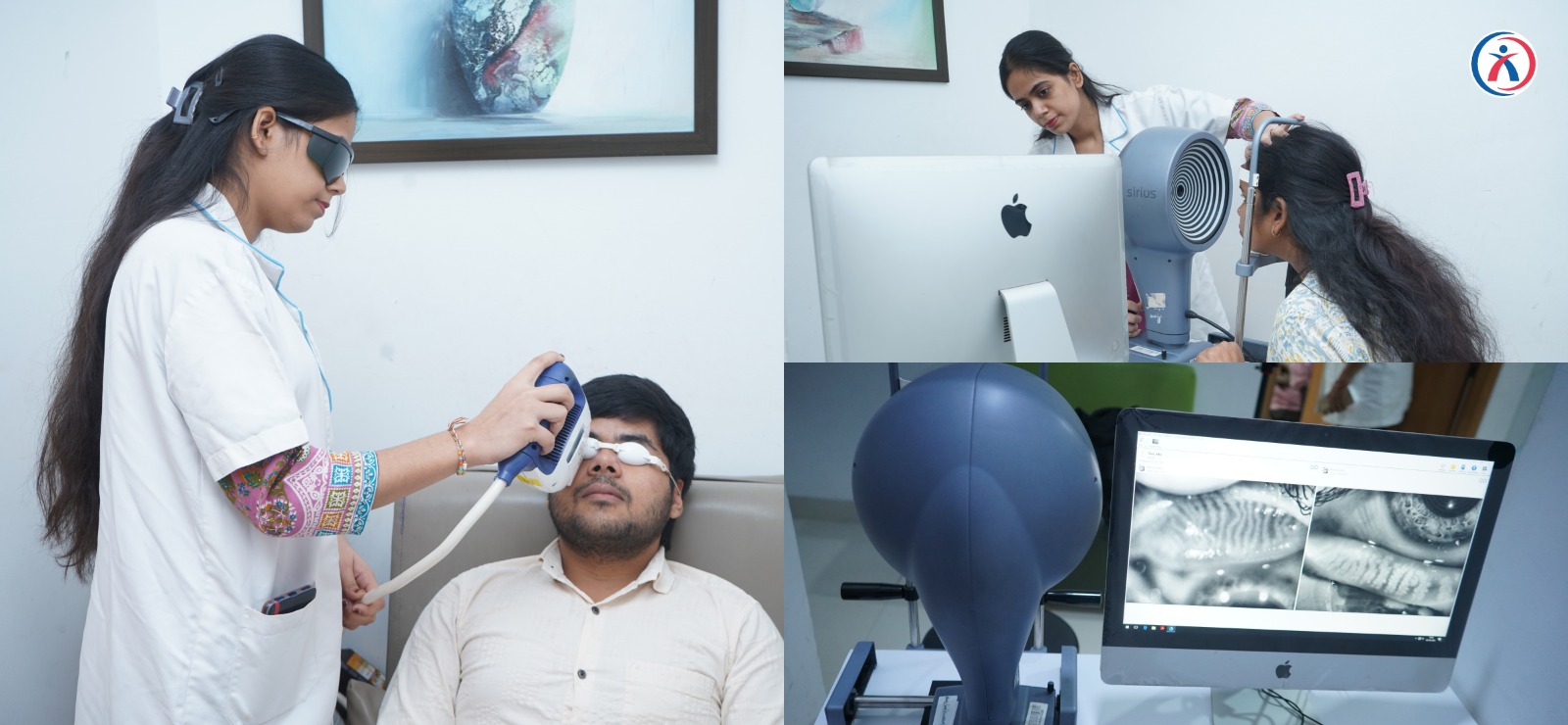
The team of doctors at Aakash Healthcare Hospital, Dwarka, ably led by Dr. Prashaant Chaudhary, Dr. Vidya Nair Chaudhary, and Dr. Amit Mehtani, have been engaged in managing dry eye for the last decade. Along with the clinical expertise, the availability of the latest technology at Aakash Healthcare Hospital provides patients with the latest treatments for dry eye disorders that are included.
Occasional dryness from a dusty room or a late-night work binge is normal. However, if your dry eyes are persistent, cause intense pain, or are accompanied by blurred vision and light sensitivity, it is time to consult us at Aakash Eye Care on the 7th floor, Aakash Hospital, Dwarka.
 011 4338 8888



Leave a Reply
Your email address will not be published. Required fields are marked *