

 Call Us:
011 4338 8888
Call Us:
011 4338 8888

 Book an Appointment
 Locate us on Google Map
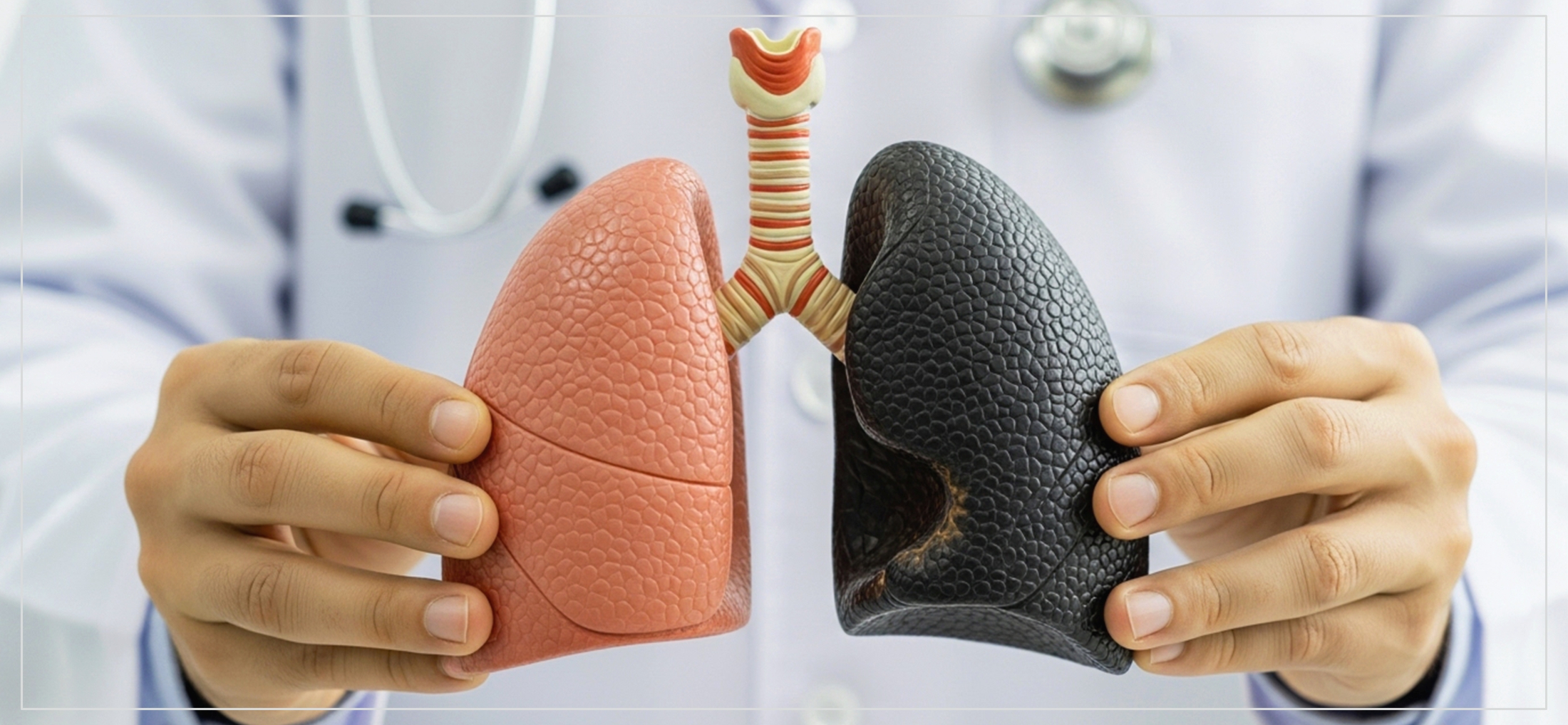
At a young age we hardly notice our breathing because it is an automatic process. Many people think it will be the same throughout their lives. However, your lung health can start to decline before you notice it. Many lifestyle habits and environmental factors can cause lung aging. You may feel breathless while climbing stairs, struggle with persistent coughing, or notice reduced stamina during routine activities.
While these signs are often dismissed as fatigue or age-related changes, they could indicate that your lungs are aging faster than your actual age.
Understanding what affects lung health can help protect your breathing and improve quality of life.
Our lungs work by expanding and shrinking to bring oxygen into our blood and send carbon dioxide out of our body. Healthy lungs are soft and stretchy, which allows air to move easily. As we get older, our lungs slowly lose some of this stretchiness. The air passages can become tighter, making it harder for oxygen to get into our body.
Lung aging happens naturally over many years. However, some health problems and unhealthy habits can make our lungs age faster. When our lungs don't work well, it doesn't just affect our breathing. It can also make us feel tired, reduce our energy, weaken our immune system, disrupt our sleep, and affect our ability to focus and feel good overall.
Early symptoms are often subtle and easy to ignore. But paying attention to your body can help identify problems before they become severe.
Common signs include:
If these symptoms continue over time, they should not be ignored.
Several factors can speed up changes in lung function and damage respiratory health.
Smoking remains one of the most common causes of accelerated lung damage. Harmful chemicals in tobacco smoke inflame airways and slowly destroy lung tissue.
Long-term smoking can increase the risk of:
Even passive smoking can affect respiratory health over time.
Breathing polluted air every day can slowly harm your lungs without you knowing it. Tiny particles of pollution can get deep inside your body and cause swelling.
People living in metropolitan cities are often exposed to:
Long-term pollution exposure contributes significantly to lung aging.
Regular movement helps maintain healthy lung function. A sedentary lifestyle can reduce respiratory capacity and weaken breathing muscles.
Physical activity improves:
Some workplaces have harmful chemicals and tiny particles that can damage your lungs.
Workplaces where this often happens include those with:
Using protective equipment is important for long-term respiratory safety.
Regular Respiratory Infections
If you get lung infections or other breathing problems often and don’t get them treated, it can slowly damage your lungs and how they work.
Health conditions such as asthma or chronic infections can increase the chance of long-term damage to your breathing.
Yes. Doctors can use different tests to check your lung function and see how well your lungs are working.
Common tests include:
These tests help identify changes early and guide treatment if needed.
Good habits can help your lungs stay strong and make breathing easier as you get older.
Try these simple steps:
Small lifestyle changes can have a long-term impact on lung health.
You should see a Pulmonologist if you have trouble breathing, a cough that won't go away, wheezing, or chest pain. It is also better to get a check-up if you smoke, work around dust or chemicals, or often get lung infections, even if you don't feel very sick yet.
At Aakash Healthcare, the pulmonology team offers comprehensive care for respiratory conditions, including spirometry, chest imaging, and specialist consultations. Whether you're dealing with persistent breathlessness, a chronic cough, or simply want a routine evaluation of your lung function, the department handles both routine evaluation and complex lung disease management.
Getting older is natural, but your lungs don't have to age faster. They work all day and night, so taking care of them is very important for your health.
You can protect your breathing by noticing early signs, avoiding harmful habits, and adopting a healthy lifestyle. If you have trouble breathing or a cough that lasts, see a doctor right away to keep your lungs healthy for a long time.
 011 4338 8888


Leave a Reply
Your email address will not be published. Required fields are marked *